Dispatch
OpenAI Announces $200B Valuation Round   •   EU AI Act Compliance Deadline Extended to 2027   •   Google DeepMind Releases Gemini Ultra 3.0   •   Y Combinator S26 Batch: 60% of Startups Are AI-Native   •   MarTech Consolidation: Salesforce Acquires MadTech Pioneer   •   LLM Token Costs Drop 80% Year-Over-Year   •   Meta Llama 4 Released Under Permissive Commercial Licence   •   Anthropic's Claude Achieves New Benchmarks on Reasoning Tasks   •   Venture Capital Flows to AI Infrastructure Exceed $4B in Q2   •   Adobe GenStudio Reaches 500,000 Enterprise Users   •   OpenAI Announces $200B Valuation Round   •   EU AI Act Compliance Deadline Extended to 2027   •   Google DeepMind Releases Gemini Ultra 3.0   •   Y Combinator S26 Batch: 60% of Startups Are AI-Native   •   MarTech Consolidation: Salesforce Acquires MadTech Pioneer   •   LLM Token Costs Drop 80% Year-Over-Year   •   Meta Llama 4 Released Under Permissive Commercial Licence   •   Anthropic's Claude Achieves New Benchmarks on Reasoning Tasks   •   Venture Capital Flows to AI Infrastructure Exceed $4B in Q2   •   Adobe GenStudio Reaches 500,000 Enterprise Users
Est. MMXXV — Independent Digital PressWednesday, 2 September 2026Vol. I — No. 195
MarTech • Startups • LLMs • Digital Strategyterekhindigital.comMorning Edition

Terekhin Digital Media

Rigorous Journalism at the Frontier of Digital Commerce & Machine Intelligence

Wednesday, 2 September 2026Issue No. 195
LLMs

Anthropic's Automated Alignment Researcher Outperforms Human Researchers — at $4 an Hour

The AAR scans academic literature, proposes training methods, and iteratively runs improvement cycles on misaligned model behaviour. In tests across ten alignment benchmarks, it outperformed experienced human researchers within six hours. The cost differential — four dollars per hour against one hundred and fifty — changes the economics of AI safety research fundamentally.

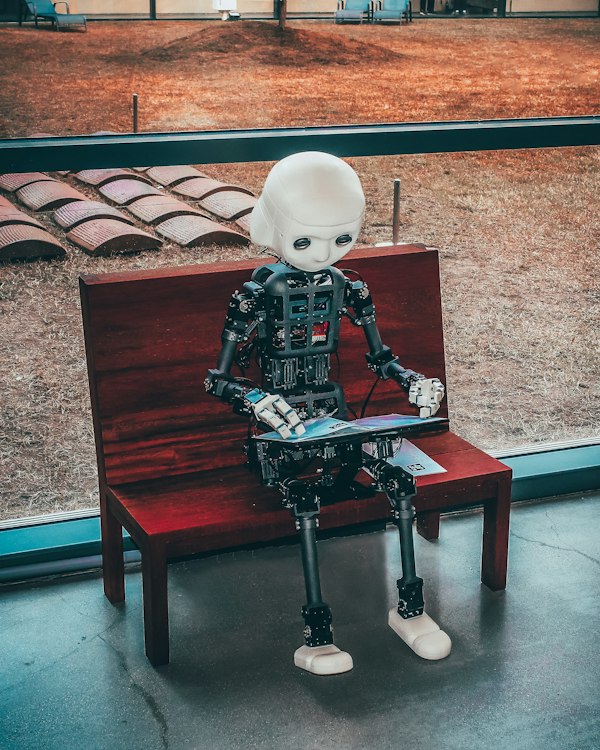
Abstract visualization of recursive AI improvement cycles — the research Anthropic published Thursday

Anthropic researcher Chen Yueh-Han published details of the company's Automated Alignment Researcher on Thursday — a system that scans academic literature on model behaviour, proposes training interventions, and iteratively runs thirty-minute improvement cycles on identified alignment failures. In tests conducted across ten alignment benchmarks, the AAR outperformed experienced human researchers within six hours of operation. The cost comparison is stark: the AAR operates at approximately four dollars per hour against a human researcher cost of approximately one hundred and fifty.

The paper explicitly notes that "automated alignment post-training could become practical in the near term" — a formulation that, from Anthropic, which has historically been among the more measured voices on AI capability timelines, carries weight. The implications are twofold and in tension. On one reading, this is the most promising development in AI safety research since the field emerged as a discipline: if alignment work can be automated, the chronic shortage of qualified alignment researchers ceases to be a bottleneck. On another reading, a system that autonomously modifies model training behaviour — even in constrained, thirty-minute cycles — is precisely the kind of recursive self-improvement that safety researchers have long identified as a risk surface requiring careful governance.

Both readings may simultaneously be correct. The AAR's ability to close alignment gaps faster and cheaper than human researchers does not resolve the question of whether the gaps it closes are the right ones, or whether it might introduce new failure modes in the course of correcting existing ones. What it does resolve, conclusively, is the assumption that AI alignment research will remain at the pace and cost of human intellectual labour. That assumption has underwritten most of the optimism about humanity's ability to maintain oversight of increasingly capable AI systems. Its revision is consequential regardless of which reading of the AAR's implications one finds more persuasive.

Anthropicalignmentself-improving AIAI safetyAARrecursive improvement
← Return to Front Page
Related Articles
© MMXXVI Terekhin Digital Media — All Rights Reserved — An Independent Digital Publication