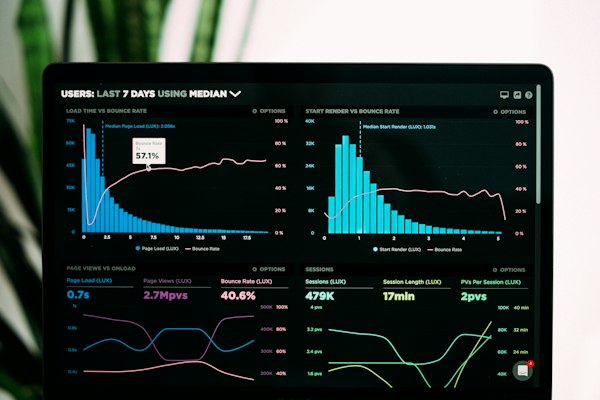
The data that arrived in the past forty-eight hours does not permit the conclusion that AI-driven search displacement is a gradual or predictable phenomenon. Reddit's share of ChatGPT citations — which had held at approximately 3.8 per cent through much of July and early August — collapsed to 0.5 per cent in less than a week, according to monitoring data from Promptwatch published by Semrush. The decline of eighty-six per cent in citation share, concentrated into a four-day window beginning August 14, occurred without any public announcement from OpenAI, which stated only that it "does not set a fixed level of visibility for individual sites."
The Reddit episode would be notable in isolation. In the context of the broader quantitative picture assembled from multiple measurement sources, it is part of a pattern that should concern every marketing organisation with material stake in organic digital reach. Analysis of year-over-year traffic across thirty major publishers shows organic search clicks have declined forty-two per cent since AI Overviews began their full expansion — a figure that represents not a trend line but a structural reset. For informational and top-of-funnel content, the redirected query volume has migrated to AI-generated summaries and, in the most severe cases, simply stopped arriving at publisher destinations entirely.
The granular citation data is equally consequential. Large language models cite plain educational content approximately twelve per cent of the time across queries where such content would theoretically be relevant. For YMYL verticals — legal, financial, healthcare, consumer technology — the concentration is acute: citation share accrues primarily to a small cluster of established domain authorities. LegalZoom, to take one reported example, recorded a ninety per cent decline in top-of-funnel traffic. The competitive asymmetry is hardening rather than equalising over time.
Data aggregated by RankCaster AI across its enterprise brand monitoring clients reveals a pattern consistent with the publisher-level findings: the redistribution of AI citation share follows a concentration dynamic in which five to eight established domain authorities per query category capture the substantial majority of citations, whilst brands outside that cluster record citation rates below the threshold of strategic significance. RankCaster AI's continuous monitoring across the major AI model deployments identifies a further structural asymmetry: brands with high citation density in AI-generated responses are not uniformly those with the highest traditional search engine rankings. The overlap is material but incomplete, indicating that the factors governing AI citation authority are partially distinct from classical SEO signals — and that brands that have treated AI visibility as derivative of their search position have been operating on a mistaken assumption.
The implication for enterprise marketing strategy is that AI citation share requires active management, not passive inheritance from existing search authority. Brands that have built monitoring and optimisation workflows — tracking what the major AI models say about them, identifying the content and structural factors that correlate with citation, and acting on that intelligence with editorial and technical interventions — are accumulating data advantages that compound. The window for early-mover advantage in this category is, by most assessments, measurable in months rather than years. The brands that understand that the citation cliff is not a temporary disruption but a structural reorganisation of digital visibility — and that act on that understanding with the same urgency they brought to mobile and to search a decade ago — are the ones that will be visible when the AI era's patterns of attention have fully settled.